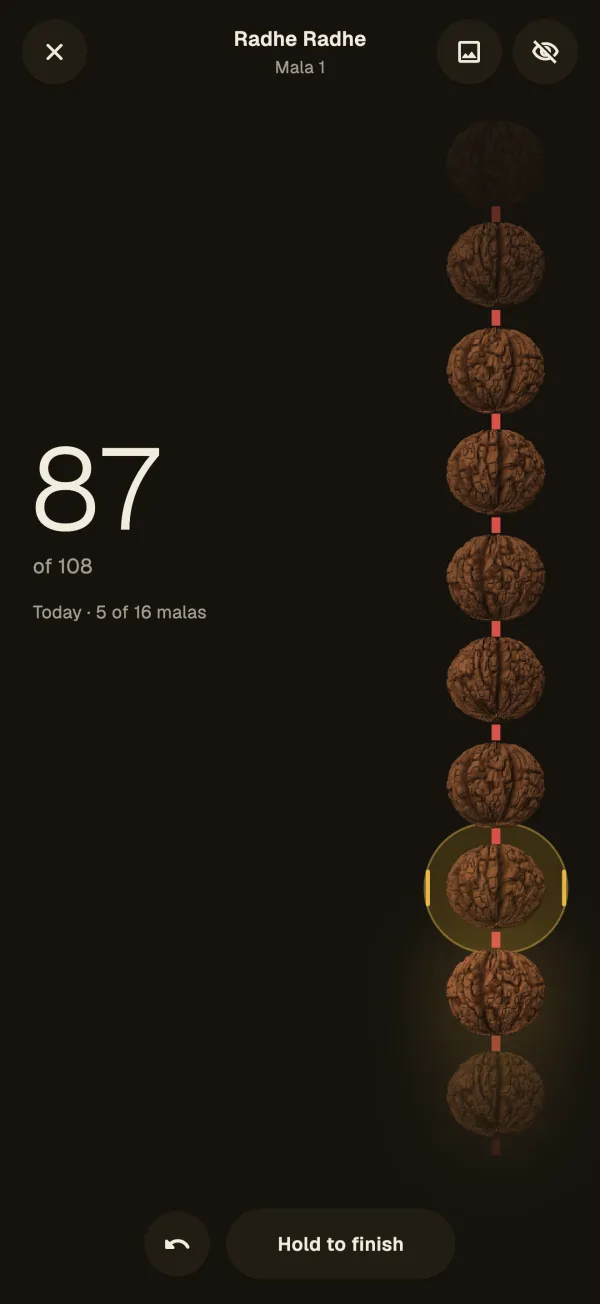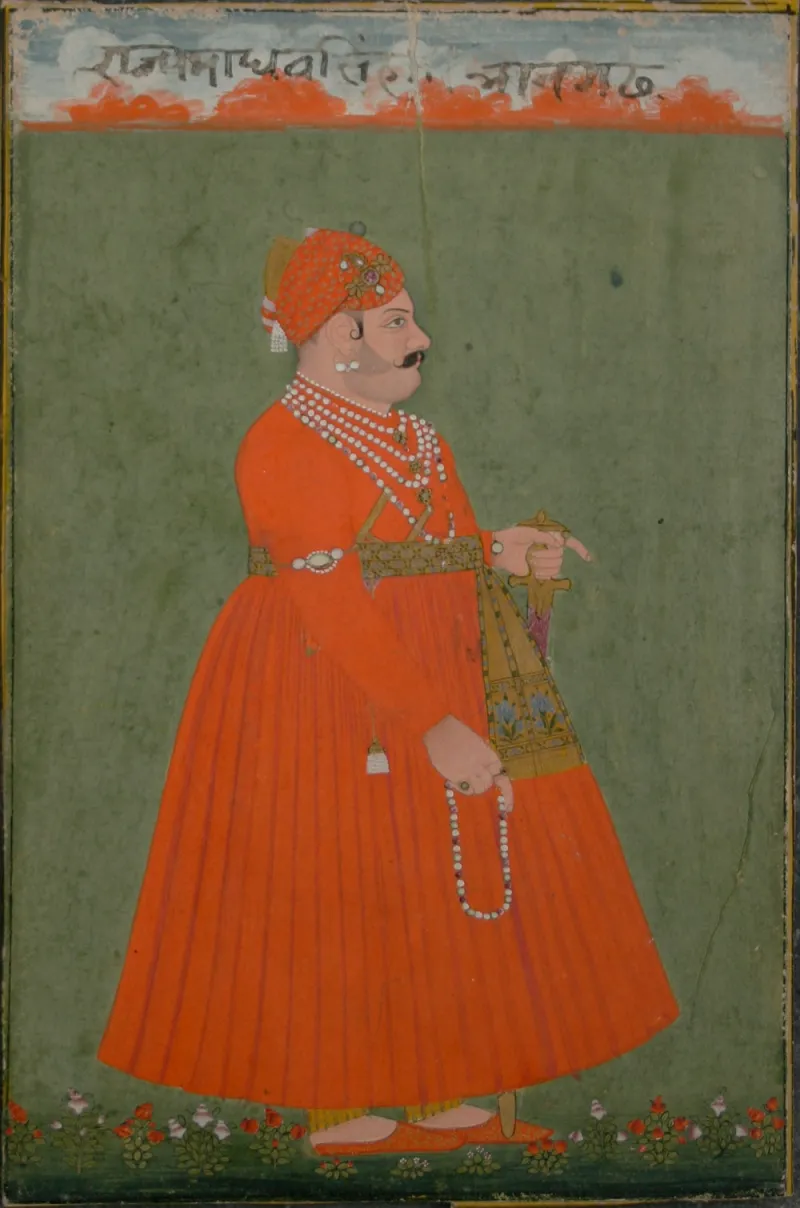
A mala gives each mantra repetition a place on the strand. Once you have a comfortable grip, you can follow the beads without keeping a second count in your head.
Start with a comfortable grip
Swami Sivananda teaches using the right thumb and middle finger, keeping the index finger clear. Rest the strand over the middle finger and move one bead at a time with the thumb. Follow your own teacher's method if it differs.
For the finger positions, an illustration and an explanation of differing instructions, read how to hold a japa mala.
One round, and the turn
- Start on the first bead beside the sumeru, the larger bead where the two ends of the mala meet.
- Say the mantra once, then move one bead. That is one count.
- After 108 beads you arrive back at the sumeru. One mala is complete.
- Do not cross it. Turn the mala in your hand, so that the bead you finished on becomes bead 1, and chant the next round back the way you came.
Not crossing the sumeru is one of the most widely kept customs of the mala. The sumeru is the guru bead: it is never counted, and the round turns at it rather than passing over it. The sumeru guide explains the parts of the mala in more detail.
Aloud, whispered or silent
Japa can be spoken aloud, whispered or repeated mentally. The names are vaikhari, upamshu and manasika. See the three forms of japa for their differences and practical considerations.
Without a mala: the finger joints
If your mala is not with you, your hand has its own beads. Each of the four fingers has three segments, which gives twelve. Touch them in turn with the thumb, one per repetition, and nine rounds of twelve make 108. Many people keep the nine rounds on the other hand, one finger or joint for each twelve.
The order varies between families; what matters is that you use the same order every time, so the thumb finds its way without thought.
If completed rounds are harder to remember than individual beads, see how to keep count of japa.
Choosing a mala
Rudraksha is sacred to Shaivas and tulsi to Vaishnavas, and there are good reasons for crystal, sandalwood and lotus seed too. A mala is usually kept for japa alone and carried in a cloth bag. What a mala is made of goes through the materials and what each one carries.
Frequently asked questions
Which hand should I hold the mala in?
In Hindu practice, the right hand. Some Buddhist traditions use the left. Follow your own tradition.
Is it wrong to touch the beads with the index finger?
Sivananda teaches keeping the index finger clear. Other teachers use a different grip. The finger-position guide explains the sources; follow the method you were taught.
Can I do japa without a mala?
Yes, on the finger joints as shown above, with a counter, or simply for a fixed time. The free online japa counter works in any browser.
How long does one mala take?
Usually 2 to 10 minutes, depending on the length of the mantra and your pace. ISKCON's 16 rounds of the Hare Krishna mantra take about an hour and a half, a little under 6 minutes a round.
How do I count without a mala?
Count on your fingers, or try a round on the online mala and move one bead after each repetition.